

Lease vs. Buy: Which Chevy Option Makes the Most Sense?
Choosing the right Chevrolet is only part of the vehicle-shopping process. You also need to decide whether leasing or buying makes more sense for your budget, driving habits, and long-term plans.
Leasing may appeal to Omaha drivers who enjoy upgrading to a newer vehicle every few years and prefer predictable terms. Buying may be a better fit for those who drive frequently, want complete ownership flexibility, or plan to keep their Chevy for many years.
Neither option is automatically better for everyone. Use this guide to compare leasing versus buying a Chevy and determine which path fits your lifestyle.
What Is the Difference Between Leasing and Buying a Chevy?
When you buy a Chevrolet, you typically pay cash or use an auto loan to finance the vehicle. Once the loan is paid in full, you own the vehicle and can continue driving it without monthly loan payments.
A lease is different. You make payments to use the vehicle for a defined term, often based partly on its expected depreciation during that period. At the end of the lease, you may be able to return the Chevy, purchase it, or explore another eligible vehicle, depending on the terms of your agreement.
Here is a quick comparison:
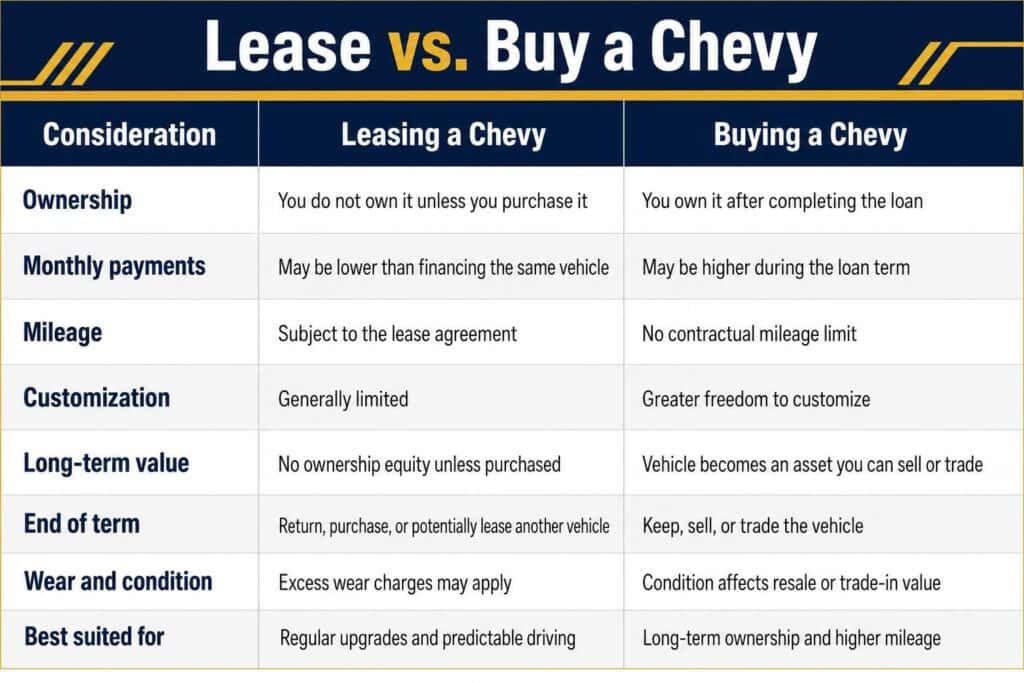
Actual payments, mileage allowances, fees, and purchase options depend on the vehicle, credit approval, available programs, and contract terms.
Benefits of Leasing a Chevy
You Can Upgrade More Frequently
Chevrolet continues to introduce new safety systems, connectivity features, infotainment technology, and performance improvements. Leasing can make it easier to move into a newer Equinox, Traverse, Silverado, Tahoe, or another Chevy after your current term ends.
This may be attractive if you prefer driving a recent model rather than keeping the same vehicle for many years.
Monthly Payments May Be Lower
Lease payments may be lower than loan payments for the same vehicle because you are generally paying for the portion of the vehicle’s value used during the lease, along with applicable rent charges, taxes, and fees.
However, a lower monthly payment does not necessarily mean a lower total cost. Compare the amount due at signing, total payments, mileage limits, fees, and lease-end obligations before making your decision.
Many Leased Vehicles Remain Under Warranty
Because leases commonly involve newer vehicles and shorter terms, the vehicle may remain within applicable factory warranty periods for much or all of the lease. Coverage depends on the specific Chevrolet and the warranty terms, so review those details before signing.
Routine maintenance, damage, excess wear, and other expenses may remain the lessee’s responsibility.
Lease-End Options Provide Flexibility
Depending on your agreement, you may be able to return the vehicle, purchase it for the stated lease-end amount, or explore a new Chevrolet when the lease concludes.
Review the contract carefully because early termination charges, disposition fees, excess mileage charges, and other conditions may apply.
Potential Drawbacks of Leasing
Leasing is not the ideal solution for every Omaha driver.
Mileage Limits
Lease agreements generally include a mileage allowance. Exceeding that allowance can result in additional charges when the vehicle is returned.
Consider your daily commute, family travel, weekend activities, and annual road trips before selecting a mileage allowance. Drivers who regularly travel throughout Nebraska or commute long distances may find buying more practical.
Wear-and-Tear Requirements
A leased Chevrolet must usually be returned in an acceptable condition. Charges may apply for damage or wear beyond what the leasing company considers normal.
Families, pet owners, construction professionals, and drivers who frequently use their vehicles for demanding activities should consider how their routines could affect the vehicle’s condition.
Limited Customization
A lease may restrict permanent modifications. If you want to install major accessories, change the vehicle’s appearance, or create a highly personalized truck or SUV, purchasing may provide greater freedom.
Always review your lease agreement before adding accessories or making modifications.
No Automatic Ownership
Lease payments do not automatically result in vehicle ownership. You must exercise an available purchase option and meet its terms if you decide to keep the vehicle.
Benefits of Buying a Chevy
You Can Keep It as Long as You Want
Buying may offer better long-term value when you plan to keep your Chevrolet after the loan is paid off. Once financing ends, you can continue driving the vehicle without a monthly loan payment, although insurance, maintenance, repairs, registration, and other ownership expenses continue.
This can be especially valuable for drivers who maintain their vehicles carefully and keep them for many years.
There Are No Contractual Mileage Limits
When you own your vehicle, you can drive as much as you need without lease-related mileage charges. Buying may therefore make sense if you:
- Have a long daily commute
- Frequently travel outside Omaha
- Take regular family road trips
- Use a truck for work
- Are unsure how much your driving needs may change
Higher mileage can still affect depreciation and resale value, but it will not trigger a contractual mileage penalty.
You Can Customize Your Chevrolet
Buying gives you greater freedom to personalize your vehicle. Silverado owners, for example, may want to add compatible towing equipment, bed accessories, wheels, storage solutions, or other upgrades.
Certain modifications can affect warranty coverage, safety, resale value, or legal compliance, so consult the dealership and review warranty information before making significant changes.
You Build Ownership Equity
As you pay down an auto loan, you build ownership interest in the vehicle. Once the loan is satisfied, the Chevrolet can be kept, sold, or traded toward another vehicle.
Its future value will depend on factors such as mileage, age, condition, demand, maintenance history, and market conditions.
Potential Drawbacks of Buying
Buying can involve higher monthly payments than leasing the same vehicle, depending on the financing terms. You are also responsible for the vehicle after applicable warranty coverage expires.
Vehicles generally depreciate over time, and their trade-in values can fluctuate. Buyers should also budget for long-term maintenance and repairs, especially if they intend to keep the vehicle well beyond the original warranty period.
When Leasing a Chevy May Make Sense
Leasing may be worth considering if you:
- Like driving a newer Chevrolet every few years
- Have predictable annual mileage
- Keep your vehicles in excellent condition
- Do not plan to make extensive modifications
- Prefer not to manage the long-term resale process
- Understand and are comfortable with lease-end requirements
An Omaha commuter with consistent driving habits, for example, may find a lease relatively easy to plan around.
When Buying a Chevy May Make Sense
Buying may be the stronger option if you:
- Plan to keep your Chevy for many years
- Drive a high or unpredictable number of miles
- Want to customize your vehicle
- Use your truck or SUV for demanding work
- Want to build ownership equity
- Prefer not to worry about lease-end wear or mileage charges
Buying can be particularly practical for drivers who expect their needs to remain stable and want to spread the cost of the vehicle across many years of ownership.
Leasing vs. Buying a Chevy EV
The lease-versus-buy decision can involve additional considerations when shopping for a Chevrolet electric vehicle.
Leasing an EV may make it easier to move into a newer model as battery technology, charging capabilities, and vehicle features continue to develop. Buying may make more sense if you want long-term ownership and expect the vehicle’s range and capabilities to serve your needs for years.
Tax-credit treatment can differ between purchases and leases, while eligibility rules and available incentives may change. Ask the finance team to explain how current programs apply to your specific vehicle and transaction before relying on an incentive in your budget.
Questions to Ask Before You Decide
Before leasing or financing your next Chevrolet, consider these questions:
- How many miles do I normally drive each year?
- How long do I usually keep a vehicle?
- Do I want to customize my Chevy?
- Which option fits my monthly and total budget?
- How much is due at signing?
- What charges could apply at the end of a lease?
- Would I want the option to purchase the vehicle?
- How would a job, move, or family change affect my driving?
- What financing or lease programs are currently available?
- What will each option cost over the entire term?
Avoid comparing options solely by their advertised monthly payments. A complete comparison should include the term, amount due at signing, taxes, fees, interest or rent charges, mileage allowance, potential lease-end costs, and expected ownership period.
Compare Chevy Lease and Finance Options in Omaha
The best choice depends on how you drive and what you want from your next vehicle. The team at the Woodhouse Chevrolet Finance Center can help you compare available lease and financing options based on your preferred model, estimated mileage, budget, and ownership goals.
Start by browsing the dealership’s new Chevrolet inventory, estimating your current vehicle’s trade-in value, or using the online payment calculator.
Programs and qualifications can change, so confirm current terms with the dealership before making a final decision. Woodhouse Chevrolet serves drivers from Omaha, Bellevue, Papillion, Council Bluffs, and surrounding communities.
Frequently Asked Questions
Is it cheaper to lease or buy a Chevy?
Leasing may offer a lower monthly payment than financing the same vehicle, but that does not necessarily make it less expensive overall. Compare the total cost, amount due at signing, fees, mileage charges, and whether you want to own the vehicle long term.
Can I buy my Chevy when the lease ends?
Many leases include a purchase option, but the price and conditions are established by the agreement. Review your contract or contact the finance team for the exact lease-end purchase amount and applicable fees.
What happens if I exceed my lease mileage?
You may be charged for each mile beyond the allowance specified in your agreement. Your contract will state the mileage limit and excess-mileage rate.
Can I end a Chevy lease early?
Early termination may be possible, but it can involve significant costs. Contact the lease provider before making plans to return or trade the vehicle early.
Is leasing a good choice for high-mileage drivers?
It may be less suitable because additional mileage can increase the payment or result in excess-mileage charges. Buying often provides more flexibility for drivers with high or unpredictable mileage.
Should I make a large down payment on a lease?
A larger upfront payment may lower the monthly payment, but it also places more money at risk if the vehicle is stolen or declared a total loss. Ask the finance team to explain the available structures and risks before deciding how much to pay at signing.

0 comment(s) so far on Lease vs. Buy: Which Chevy Option Makes the Most Sense?