

How Often Should You Service Your Chevy Silverado?
Your Chevrolet Silverado is built to handle demanding jobs, daily commutes, long highway drives, and Nebraska’s changing weather. However, even a hardworking truck needs regular maintenance to continue performing at its best.
As a general guideline, you should service your Chevy Silverado approximately every 7,500 miles. Your truck’s exact maintenance needs will depend on its model year, engine, mileage, driving conditions, and how you use it. Always follow the maintenance schedule in your owner’s manual and pay attention to your truck’s Oil Life System and dashboard alerts.
Below, the service team at Woodhouse Chevrolet Omaha explains the common Chevy Silverado maintenance intervals and the signs that your truck may need attention.
Chevy Silverado Maintenance Schedule at a Glance
The following schedule provides general guidance for a gas- or diesel-powered Silverado. Requirements can vary, so consult the owner’s manual for your specific truck before authorizing or postponing service.
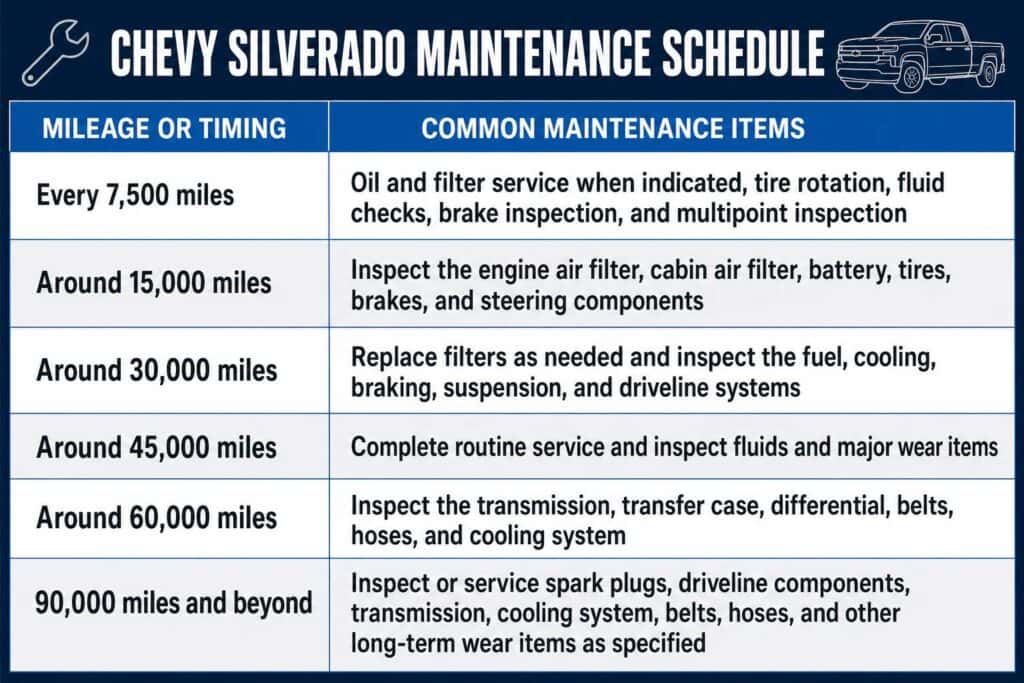
This is a planning guide rather than a substitute for the factory schedule. Chevrolet recommends using the maintenance information in your truck’s owner’s manual because requirements differ by model year and configuration. Chevrolet provides downloadable manuals and guides for specific vehicles.
How Often Should You Change the Oil in a Chevy Silverado?
Follow your Silverado’s Oil Life System instead of relying solely on a fixed mileage interval. The system estimates the remaining life of the engine oil based on how the vehicle is operated.
Chevrolet’s general maintenance guidance recommends an oil and filter change every 7,500 miles or when directed by the Oil Life System. When the “Change Engine Oil Soon” message appears, Chevrolet advises having the service completed as soon as possible—generally within the next 600 miles. The oil and filter should be changed at least once annually, even when the system has not displayed an alert. Review Chevrolet’s engine-oil guidance.
Oil may need attention sooner when your Silverado regularly experiences:
- Frequent towing or hauling
- Repeated short trips
- Stop-and-go traffic
- Extended idling
- Dusty or gravel roads
- Extremely hot or cold temperatures
- Snowplow use
- Commercial or other heavy-duty operation
Your truck’s engine also determines the proper oil type and viscosity. Check the owner’s manual or ask a Chevrolet Certified Service technician before adding or replacing engine oil.
How Often Should You Rotate Silverado Tires?
Chevrolet’s general recommendation is to rotate the tires approximately every 7,500 miles. Regular rotations help promote even tread wear and may extend tire life.
A tire inspection should also include checking:
- Tread depth
- Inflation pressure
- Uneven wear
- Cracks, bulges, or punctures
- Wheel alignment symptoms
- The condition of the spare tire, when equipped
Nebraska temperature changes can affect tire pressure. Check it regularly, especially when the seasons change or before towing and long-distance travel. Use the pressures listed on the vehicle’s Tire and Loading Information label rather than the maximum pressure printed on the tire.
When Should Silverado Brakes Be Inspected?
Your Silverado’s brakes should be visually inspected during routine maintenance visits. Unlike certain replacement items, brake pads do not have one universal service interval. Their lifespan depends on driving habits, payload, towing frequency, road conditions, and the type of driving you do.
Schedule a brake inspection if you notice:
- Squealing, scraping, or grinding noises
- A soft or unusually firm brake pedal
- Vibration while braking
- Longer stopping distances
- Pulling to one side
- A brake warning light
- Fluid near a wheel
Frequent towing and hauling can increase the demand placed on the braking system, making routine inspections especially important for working trucks.
When Should You Replace the Air Filters?
Your Silverado may have an engine air filter and a passenger-compartment air filter. Both should be inspected regularly and replaced when dirty or according to the model-specific schedule.
The engine air filter helps prevent dirt and debris from entering the engine. A clogged filter may contribute to reduced performance or acceleration. Trucks driven on construction sites, farms, gravel roads, or other dusty surfaces may require more frequent inspections.
The cabin air filter helps remove dust and other airborne particles before air enters the passenger compartment. Reduced airflow from the vents or persistent odors may indicate that it is time for replacement.
What About Transmission and Four-Wheel-Drive Service?
Transmission, transfer-case, and differential service requirements vary significantly among Silverado models. A Silverado 1500 used mainly for commuting may have different needs than a Silverado HD that routinely pulls a trailer.
These components should be inspected according to the owner’s manual, with particular attention given to trucks used for:
- Towing
- Heavy hauling
- Snowplowing
- Off-road driving
- Commercial work
- Frequent low-speed operation
- Driving in mud, sand, or deep water
Do not assume that every Silverado uses the same fluid or service interval. A Chevrolet Certified Service technician can identify the correct specifications using your truck’s year, engine, drivetrain, and VIN.
Does a Duramax Diesel Silverado Need Different Maintenance?
Yes. A Silverado equipped with a Duramax diesel engine has maintenance needs that differ from those of a gasoline-powered model. Depending on the truck, these can include:
- Diesel engine oil and filter service
- Fuel-filter replacement
- Diesel Exhaust Fluid monitoring
- Water-separator maintenance
- Diesel emissions-system care
- Heavy-duty cooling-system inspections
Dashboard messages can help you track certain diesel maintenance needs, but they do not replace the owner’s manual. Follow the schedule written for your specific Duramax engine and Silverado model.
Why Omaha Driving Conditions Matter
Silverado owners around Omaha encounter hot summers, below-freezing winter temperatures, road salt, potholes, and occasional dusty or muddy conditions. Many owners also use their trucks to tow boats, campers, equipment, or utility trailers.
These conditions can place additional stress on:
- Batteries
- Tires
- Brakes
- Suspension components
- Engine oil
- Cooling systems
- Wiper blades
- Four-wheel-drive components
A seasonal inspection before winter or summer can help identify worn parts and low fluids before extreme weather arrives. Washing road salt from the truck’s body and undercarriage can also help protect exposed components from corrosion.
Signs Your Chevy Silverado Needs Service
Do not wait for the next scheduled appointment if your truck begins behaving differently. Have it inspected when you notice:
- A check-engine or service warning light
- Fluid leaking beneath the truck
- Unusual engine, brake, or suspension noises
- Difficulty starting
- Reduced fuel economy
- Rough shifting
- Steering-wheel vibration
- Uneven tire wear
- Overheating
- Reduced braking performance
- Loss of power while accelerating or towing
Addressing a small concern early may prevent it from becoming a larger and more expensive repair.
Benefits of Regular Chevy Silverado Maintenance
Following the recommended Silverado service schedule may help you:
- Protect engine and drivetrain performance
- Improve reliability
- Promote even tire wear
- Maintain confident braking
- Reduce the risk of unexpected repairs
- Preserve resale or trade-in value
- Identify potential problems earlier
- Keep accurate service records
Routine maintenance is especially valuable if you plan to keep your Silverado for many years or depend on it for work.
Schedule Chevy Silverado Service in Omaha
If your Silverado is approaching its next service interval, displays a maintenance alert, or simply needs a seasonal inspection, visit Woodhouse Chevrolet Omaha. Our Chevrolet Certified Service team can review your truck’s model year, engine, mileage, and driving history to recommend the appropriate services.
Whether you need a Chevy Silverado oil change, tire rotation, brake inspection, filter replacement, or more extensive truck maintenance, our team is ready to help.
Schedule your Chevy Silverado service in Omaha today.
Frequently Asked Questions
How often should a Chevy Silverado be serviced?
A general guideline is every 7,500 miles for routine maintenance such as a tire rotation, multipoint inspection, and an oil change when indicated. Follow your Silverado’s Oil Life System and model-specific owner’s manual.
Can I drive after the “Change Engine Oil Soon” message appears?
Chevrolet advises scheduling an oil and filter change as soon as possible, generally within the next 600 miles. If an oil-pressure warning appears, safely stop the vehicle and follow the instructions in the owner’s manual.
Does towing change my Silverado maintenance schedule?
It can. Regular towing places additional demands on the engine, transmission, brakes, tires, cooling system, and driveline. Consult the severe-use or towing guidance in your owner’s manual.
How often should Silverado tires be rotated?
Chevrolet generally recommends rotating the tires every 7,500 miles. Your tires may need earlier attention if you notice uneven wear, vibration, or changes in handling.
Where can I find the maintenance schedule for my Silverado?
Check the Service and Maintenance section of your owner’s manual. Chevrolet also offers an online vehicle maintenance resource and searchable manuals organized by model and year.
0 comment(s) so far on How Often Should You Service Your Chevy Silverado?